
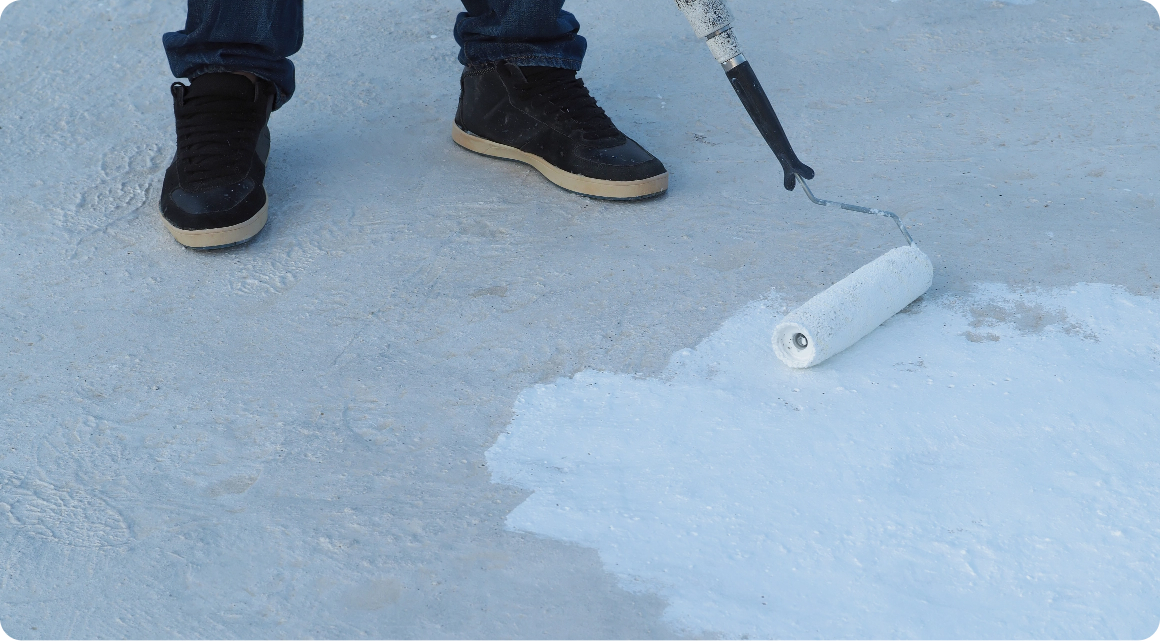
If you own a home in Southern Arizona with a flat (built-up) roof, there’s one essential maintenance task you can’t afford to skip: recoating.
Done properly, a coating protects your roof from the elements, helps prevent leaks, and reflects heat—extending your roof’s life while keeping your energy bills in check.
But not all coatings (or applications) are created equal.
IT STARTS WITH A SOLID SURFACE
“Like any paint job, 80% of success is in the prep,” says the team at All Dry. Before any coating is applied, the roof needs to be clean, solid, and crack-free. That means:
- Checking all seams, penetrations, and edges for flaws
- Repairing any damage and allowing it to fully cure
- Cleaning the surface with trisodium phosphate (TSP), a hose, and a soft broom—or, better yet, a pressure washer
Without prep, even the best coating won’t stick—or protect.
CHOOSE QUALITY, NOT JUST COVERAGE
According to David Mahmoodi, general manager at Tucson Rubberized Coatings, “A good roof coating should contain at least one pound of titanium dioxide per gallon.” That’s the same UV-blocking ingredient used in sunscreens—and it’s what gives roof coatings their white, reflective power. Not all coatings are created equal. Look for:
- Titanium dioxide, to reflect heat
- Flexible resins, which resist cracking, chalking, and dirt buildup
- Insulating microspheres, which help reflect heat in the summer and retain warmth in the winter
A quality white or light-colored coating reflects sunlight and keeps your roof cooler—reducing the heat load on your home. That can mean lower cooling costs, especially during Tucson’s brutal summers.
COLOR COUNTS, TOO
While white is the most reflective and common choice, it’s not the only option. Desert tan coatings, for instance, offer a more natural look while sacrificing only about 10% of reflectivity. For some homeowners, it’s a worthwhile tradeoff between curb appeal and cooling power.
Dark roofs, by contrast, absorb heat and degrade faster under Arizona’s sun. “It’s like leaving a black car in the driveway instead of the garage,” says the All Dry crew. “It’s going to get baked.”
COATING TIPS FROM THE ALL DRY CREW
- Recoat every 4–5 years, or sooner if you notice signs of wear
- Always apply two coats unless you’re using a premium product on a recently coated roof
- Don’t skip prep—it’s what makes your coating effective and long-lasting
DON’T SKIP PREP—IT’S WHAT MAKES YOUR COATING EFFECTIVE AND LONG-LASTING
Coating your flat roof isn’t just a smart move—it’s a necessary one in Arizona’s extreme climate. And when it’s done with the right prep, product, and timing, it can mean the difference between a roof that leaks… and one that lets you Shine On.
Flat roofs are great for Arizona homes—as long as they’re maintained. A high-quality roof coating, applied the right way, prevents leaks, protects your investment, and helps your home stay cooler through the hottest months.
It’s one of the smartest ways to extend the life of your roof—and keep your home shining bright.